GEO in Practice: How to Get Your Site Cited by Google AI Mode in 2026
Google AI Mode has changed the game. Discover how GEO (Generative Engine Optimization) is crucial for maintaining your organic traffic and ensuring citations in 2026. A complete guide with practical tips.
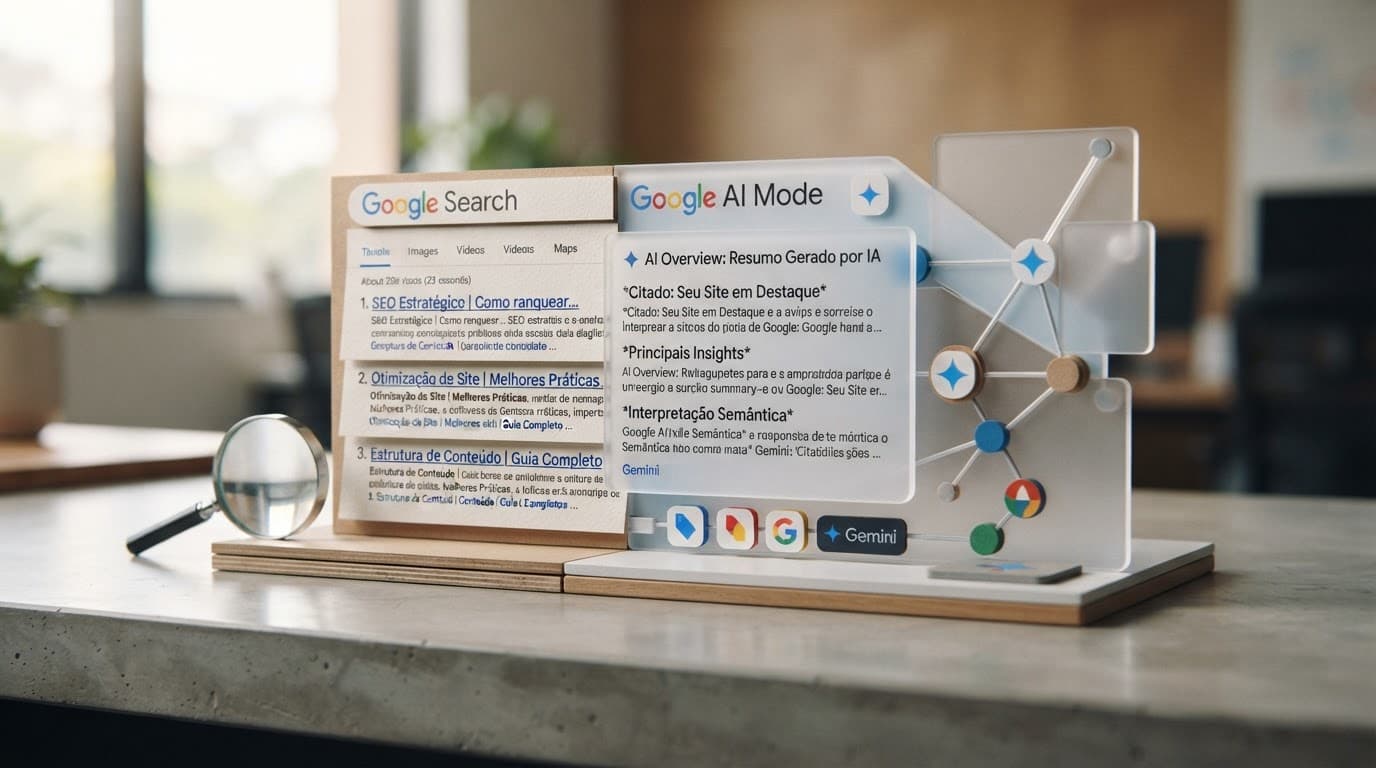
The End of the Traditional Blue Click and the Rise of AI in Search
On May 19, 2026, Google announced at the Google I/O event the biggest overhaul of its Search in over 25 years, placing Gemini 3.5 Flash at the center of the experience. The so-called AI Mode, previously optional, became the default, enabling rich interactions with images, documents, videos, and Chrome tabs. This shift directly impacts organic traffic: AI Overviews (AI-generated summaries) already appear in nearly half of queries, and when they do, the first traditional organic result suffers significant click losses. For SME owners, marketing professionals, and content creators, this means that old keyword SEO needs to evolve.
If the goal was once to reach the first organic position, the new objective is to be cited by large language models (LLMs) of AI. Those who understand GEO, an acronym for Generative Engine Optimization, are the ones protecting their traffic and ensuring visibility in the new landscape. This comprehensive guide explains what GEO is and how to apply it so your site is recognized and cited by Google's artificial intelligence in 2026.
Key Takeaways:
- Google Search has been rebuilt around Gemini 3.5 Flash, making AI Mode the default experience.
- AI Overviews impact organic traffic, reducing clicks on traditional results.
- Sites cited in AI Overviews receive 35% more clicks than those in the first position.
- GEO (Generative Engine Optimization) is the new strategy to ensure visibility and traffic.
- GEO tactics include original research, structured answers, and schema markup.
What is AI Mode and Why is Organic Traffic Changing?
AI Mode represents a new era in search engine interaction. By integrating Gemini 3.5 Flash, Google offers more complete and contextual answers directly on the results page. This is revolutionary, but it brings challenges: by March 2026, AI Overviews were already appearing in 48% of queries, a significant 58% increase in just three months (from December 2025 to March 2026). Google I/O 2026 detailed this shift.
When an AI Overview is displayed, the first traditional organic link can lose up to 18% of clicks. Queries with informational intent suffer even more, with traffic drops of 30% to 40%. For those working in SEO, the concern is legitimate: how to maintain relevance when AI summarizes the information before the user even clicks?
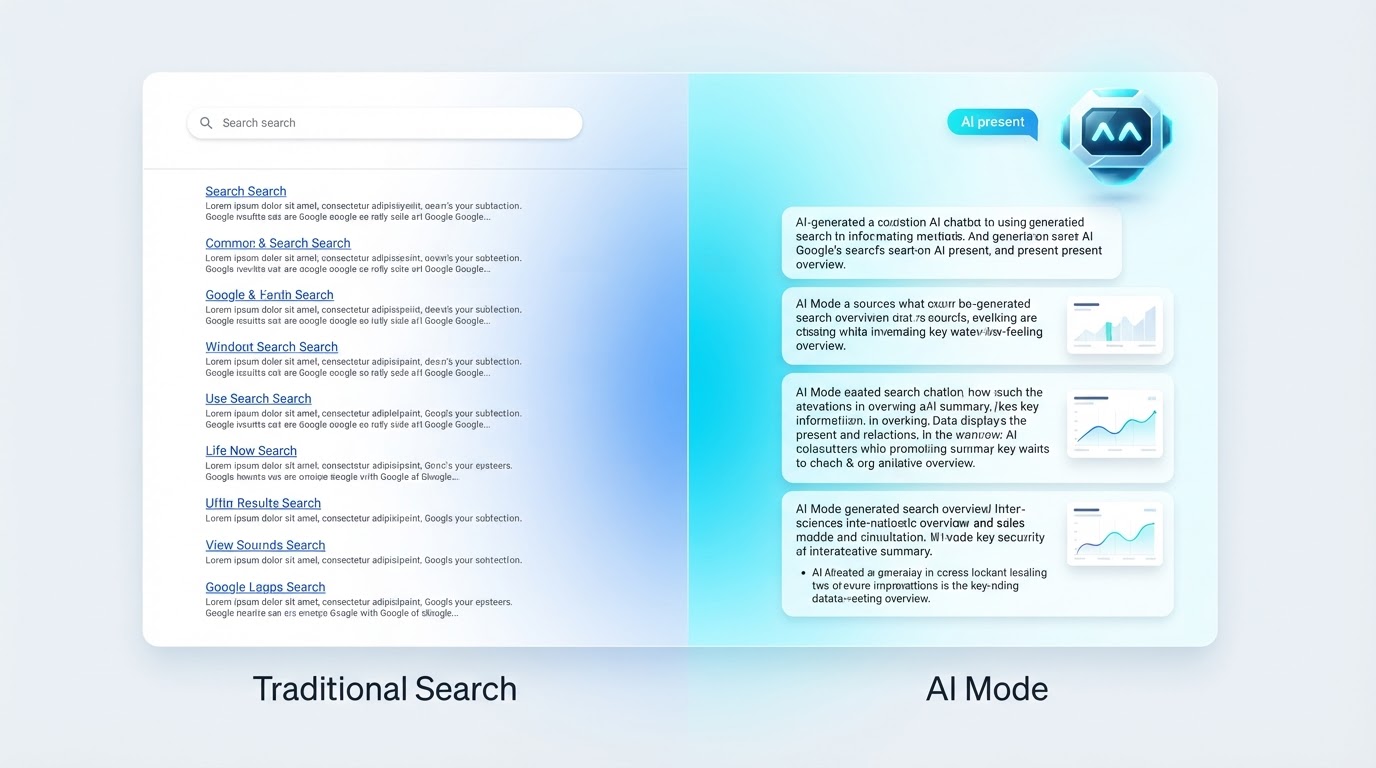
The Hidden Opportunity: Being Cited in AI Overviews
Despite the negative impact on direct traffic to the first result, there is a great opportunity for those who adapt. Sites cited within AI Overviews experience a 35% increase in organic clicks compared to those that would achieve the first position in a non-AI scenario. This is due to the trust users place in AI-summarized answers and the convenience of getting information quickly.
However, attention needs to be focused. Only 14% of URLs cited in AI Mode match those appearing in AI Overviews. This indicates that Google is seeking diverse and reliable sources to compose its AI-generated answers, not just the results that traditionally led the rankings. Understanding how your content can be selected to appear in these answers is the new Holy Grail of SEO.
Understanding GEO: Generative Engine Optimization for AI
This is where GEO, or Generative Engine Optimization, comes in. It is a set of practices focused on ensuring that your website's content is understood, trusted, and, crucially, cited by the LLMs used by Google. It's not just about optimizing for crawler bots, but for the AIs that now interpret and summarize information.
GEO assumes that AI doesn't just look for keywords, but for content quality, originality, and authority. To succeed, your site needs to position itself as a reliable and in-depth source of information. The metric that becomes important is the citation rate: how often your content is referenced in AI-generated responses.
Essential GEO Tactics to Appear in Google AI Mode
To implement GEO and increase your chances of being cited by Google AI Mode, focus on the following tactics:
1. Original Research and First-Hand Data
AIs are trained on vast datasets, but they value and tend to cite original content and exclusive insights. Invest in your own research, case studies, interviews, and directly collected data. The impact of the AI Index 2026 report reinforces the importance of updated and original data.
2. Structured Answers with Thesis, Evidence, and Conclusion
Organize your content logically and clearly. Present a thesis (the main point), provide solid evidence (data, examples, sources), and conclude objectively. This structure facilitates AI comprehension and accurate information extraction.
3. Topical Depth Over Single Optimized Pages
Instead of creating multiple generic pages optimized for keyword variations, focus on deepening a topic within a set of interconnected content. A page about a subject can link to others that detail specific aspects, creating an information ecosystem that AI can explore.
4. Strategic Schema Markup
Use schema markup (such as Article, FAQ, HowTo, Organization, Product) to provide structured metadata to search engines. This helps AI understand your content's context and relevance more efficiently. Tools like Next.js 16.3 Preview facilitate the implementation of advanced web features.
5. Clear Signals of Authorship and Expertise
AI seeks reliability. Ensure content authorship is clear, with detailed biographies, links to professional profiles, and mentions of credentials. Demonstrate expertise (E-E-A-T: Experience, Expertise, Authoritativeness, Trustworthiness) explicitly. Topics like Claude Sonnet 5 and OpenAI Launches GPT-5.6 demonstrate the evolution of AIs in understanding and generating authorial content.
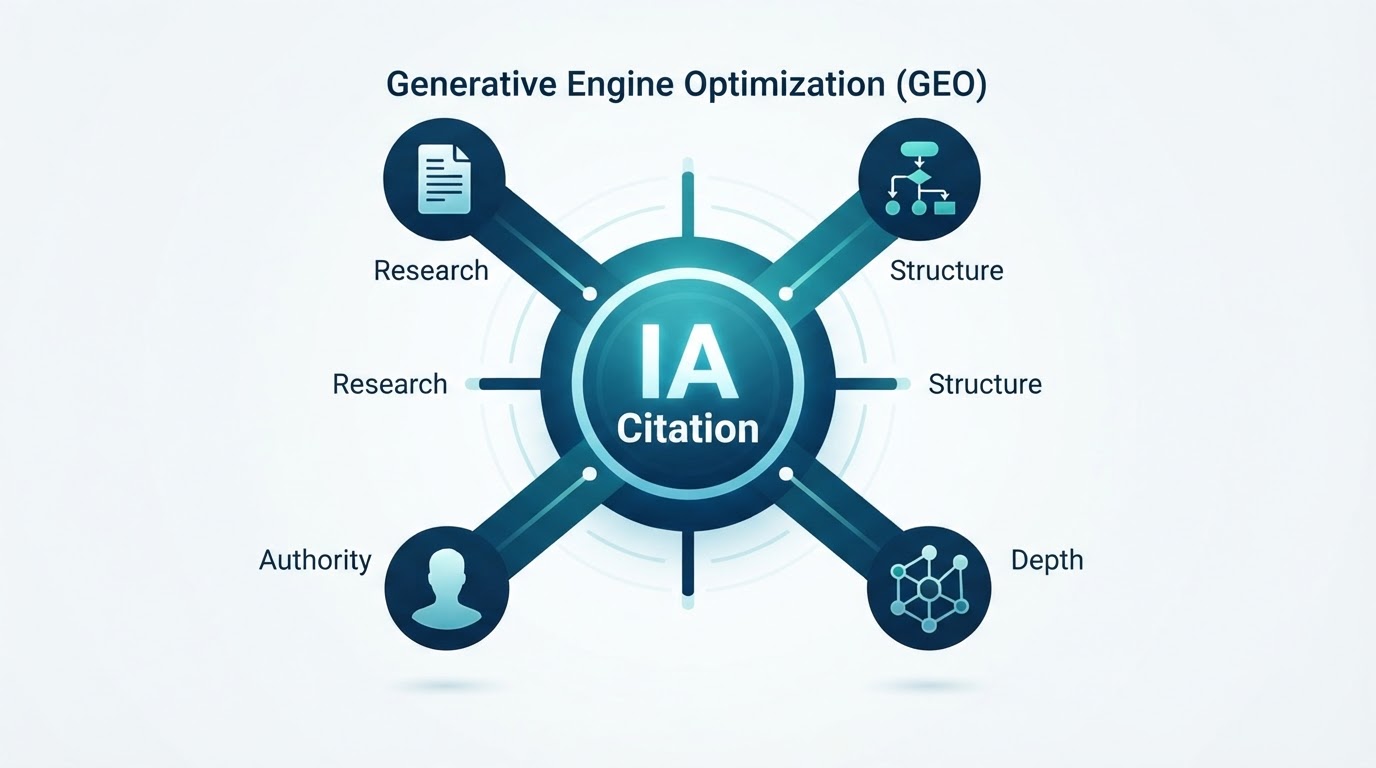
Comparison: Traditional SEO vs. GEO for AI Mode
| Aspect | Traditional SEO (Pre-AI Mode) | GEO (Generative Engine Optimization) for AI Mode |
|---|---|---|
| Main Goal | Ranking in the 1st organic position for specific keywords. | Being cited as a reliable source in AI-generated answers (AI Overviews). |
| Focus | Keyword optimization, meta descriptions, page titles. | Quality, originality, depth, structure, authorship, and E-E-A-T. |
| Key Metric | Ranking position, direct organic traffic. | Citation rate in AI Overviews, organic traffic from citations. |
| Content | Optimized for search engines and clicks. | Optimized for understanding, reliability, and citation by LLMs. |
| Strategy | Creating pages focused on keyword niches. | Creating in-depth, interconnected content ecosystems. |
Frequently Asked Questions about GEO and Google AI Mode
What is Google AI Mode?
Google AI Mode is Google's new default search experience, launched in 2026, which integrates Gemini 3.5 Flash to provide summarized and contextual answers directly on the results page. It allows for richer queries, accepting various attachment types, and is redefining how users interact with information online.
How does AI affect organic traffic?
When an AI Overview appears, it tends to capture user attention, which can result in lost clicks for the first traditional organic results, especially for informational queries. However, being cited within these AI summaries can generate significantly more traffic than the first position in a non-AI scenario.
What does

Sobre a Lee Sugano
Lee Sugano
Agência de soluções digitais com base no Japão e clientes em mais de 10 países. Compartilhamos insights sobre desenvolvimento, design e marketing digital para empresas que não aceitam genérico.
Enjoyed this content?
Receive exclusive insights about web development, design, and digital marketing straight to your inbox.
No spam. Unsubscribe anytime.